

SENSAFE: enhanced awareness through audio and haptics
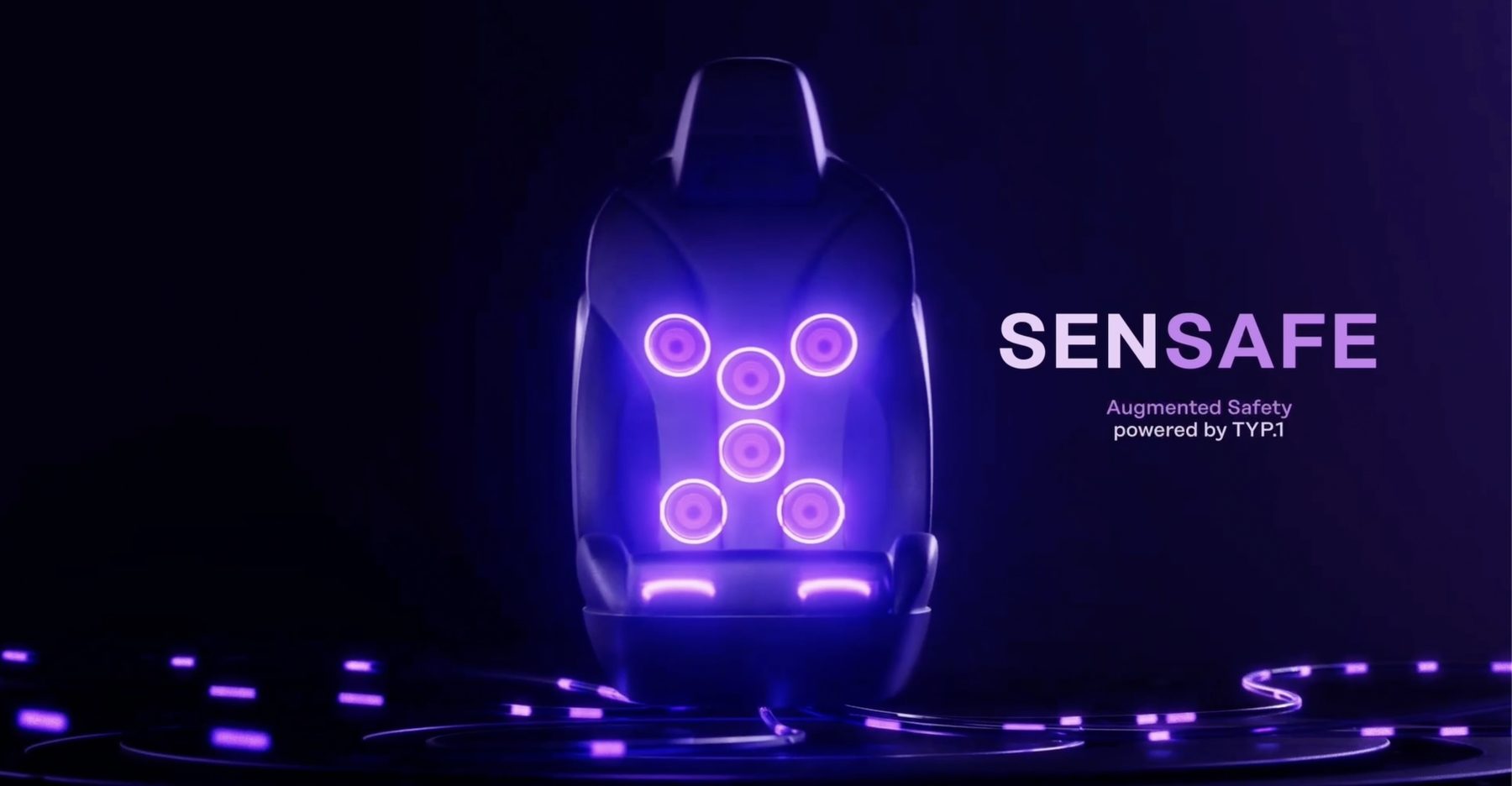
SENSAFE is an innovative system designed to enhance driving safety by integrating audio-haptic feedback. The system aims to reduce human errors in traffic by providing real-time, intuitive warnings to drivers, particularly in complex and potentially hazardous situations like blind spots. The technology uses 3D audio cues and haptic vibrations embedded in the driver’s seat to ensure immediate, non-intrusive communication.
The film is hosted on Vimeo. It loads only after you press play.
The challenge
The most common causes of accidents: errors when turning, reversing, and when starting and pulling away. The human factor is at the center of these errors, as the driving situation is misjudged due to distractions, excessive demands and lack of concentration. People are flooded with stimuli and therefore sometimes make the wrong decisions. How can we support people in this?
How could an audio-haptic feedback system increase driving safety without distracting or overwhelming the driver?
- Increase driving safety
- Minimize human error
- Improve situational awareness
Our approach
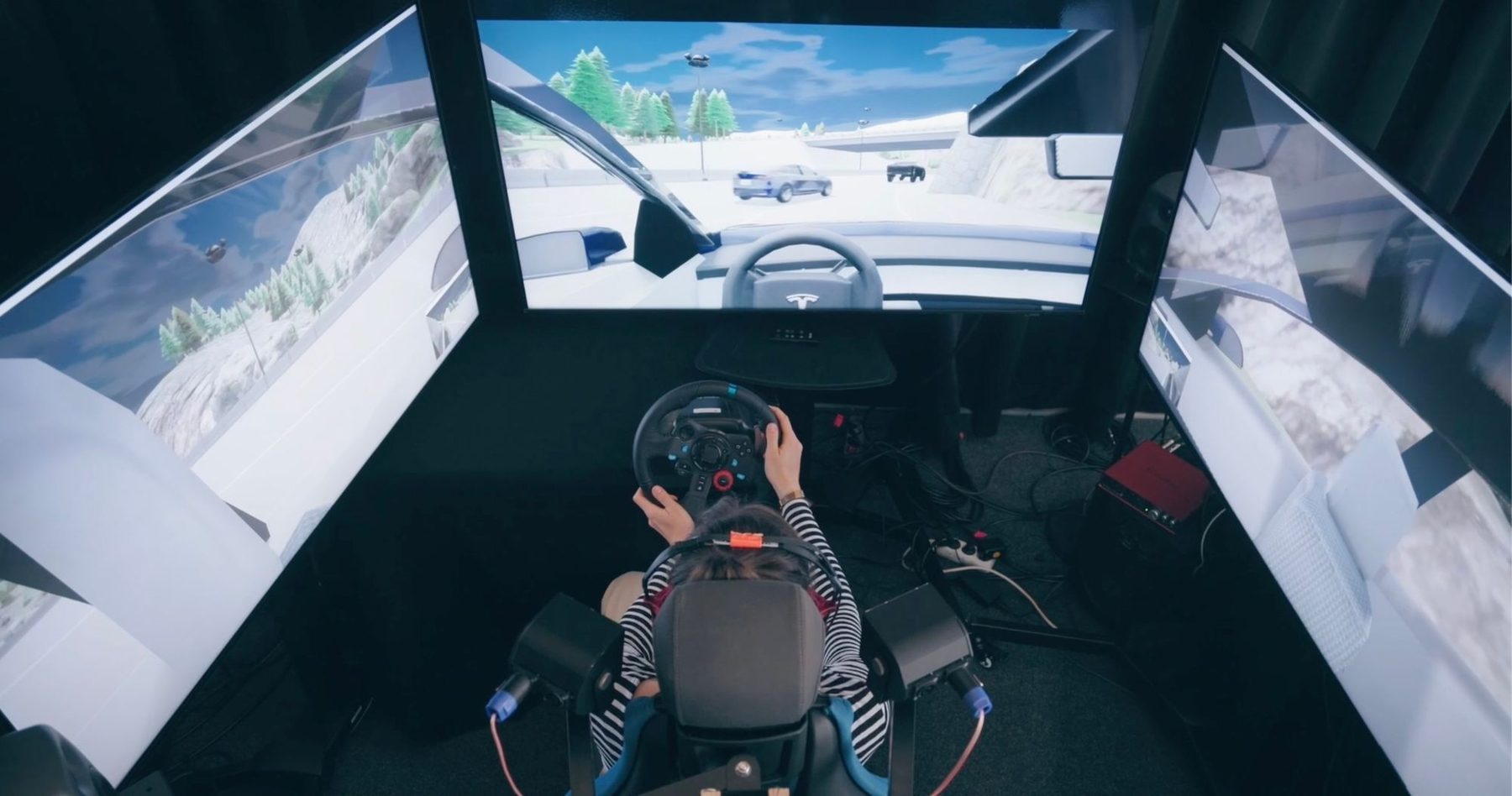
SENSAFE uses an advanced perception enhancement system in which the driver receives haptic feedback as soon as other road users (such as bicycles or cars) enter the blind spot. Regardless of the volume in the vehicle or the driver’s line of vision, an increasingly intense pulse in the seats signals the approach of an object. The position of the road user is precisely localized in space, and the haptic signal is intensified by the relative speed and proximity of the object.
- AttentionDraw the driver’s spatial attention to potential hazards around the vehicle.
- WorkloadThe mediation must not be annoying, overwhelming or distracting for the driver.
- ComprehensionCommunicate the characteristics and directions of approaching road users intuitively and comprehensibly in the respective situation.
- LikingThe result should not have a negative impact on the driving experience.
The experiment
The sound design for SENSAFE comprises several acoustic and haptic levels that are tailored to the intuitive communication between driver and vehicle. The following components are taken into account:
- Interior soundscapeIn order to improve the interactivity of the vehicle, a dynamic engine sound was developed for the steering wheel controller used in the prototype, which reacts to the actuation of the accelerator pedal.
- Exterior soundscapeThe acoustic representation of the exterior environment in the prototype takes the form of a static sound image that suggests what is happening outside the vehicle within four defined traffic scenarios.
- Signature soundsIn addition, characteristic sound signatures are used for different road users such as cyclists, pedestrians and vehicles. These signature sounds are interactive and positioned spatially so that they precisely indicate to the driver the direction and distance of the approaching road user.
These carefully tuned sounds in combination with haptic feedback ensure that the driver can grasp the traffic situation quickly and intuitively, which increases safety and reduces the workload.
The conclusion
This project could help to effectively integrate haptic technologies into vehicle safety systems in order to increase road safety and reduce the number of road accidents caused by the blind spot problem. Particular attention should be paid to the intuitive comprehensibility and non-distracting nature of the feedback in order to maximize driver acceptance and comfort.
“Sound Innovation Lab has been a true partner supporting us with mission-critical research, prototyping of future scenarios and use cases, helping us envision and better understand the sonic landscapes we should be designing for.”
Credits
- Johannes Helberger, Dr. Steffen Lepa
- Aykan Agdag, Basile Henkes, Aleksandra Klushina, David Paulß
- Samuel Braun, Fabian S. Klinke, Zerui Quan, Raphael Schwanbeck
- Valentin Ackva, Lina Campanella, Xiaosen Ruan, Vladimir Salazar
- UX Sound Innovation Lab GmbH
Johannes Helberger, Andreas Hoppe - icon incar GmbH
Alvaro Marquez, David Speith, Alexander Sanwald, Florian Gulden - Audio Communication Group
Prof. Dr. Stefan Weinzierl